Last Wednesday, our church gathered in a moment of radiant celebration—lifting up Jesus as the Light of the World. His words in John 8:12 still shine with timeless clarity: “I am the light of the world. Whoever follows me will never walk in darkness, but will have the light of life.”
Just a few chapters later, John narrates the occasion when Jesus was at the temple attending the Festival of Lights—the Festival of Dedication, or Hanukkah (John 10:22). The juxtaposition is striking: as the temple lamps recalled God’s past deliverance, Jesus revealed Himself as the greater Light, one that outshines every earthly flame and fulfills every symbol.
This parallel invites us to see not only history, but hope—Jesus as the ultimate Light who illuminates every generation.
The Backdrop of Hanukkah
To grasp the depth of this connection, we must step back into history. Hanukkah commemorates the rededication of the temple after its desecration under Antiochus Epiphanes, who defiled it by sacrificing a pig to Zeus. Against all odds, Judah Maccabaeus led a small band of Jewish rebels to a miraculous victory.
The temple was cleansed, sacrifices restored, and the people rejoiced for eight days. Tradition holds that when the temple was rededicated, only a single jar of consecrated oil remained—enough to keep the lamp burning for just one day. Yet, miraculously, that oil lasted for eight full days until new oil could be prepared. This became a powerful symbol of God’s provision and faithfulness.
From that time forward, the Festival of Dedication or Festival of Lights —Hanukkah—was celebrated annually. Even today, Jewish families mark Hanukkah by lighting candles for eight nights, remembering both the victory of the Maccabees and the miracle of the oil.
The Greater Light Steps In
With this backdrop in mind, John 10 takes on profound new meaning.
The Festival of Lights was a time when the people remembered Judas Maccabaeus, the rededicated temple, and the lamps that burned to symbolize God’s faithfulness. Yet into that very setting walked Jesus, shifting the narrative entirely. Judas, though a courageous leader, was only a man; Jesus is the Messiah, the Son of God. The temple, though rededicated, was still made of stone; Jesus declared Himself the true temple (John 2:21). The lamps, though bright, were temporary; Jesus is the Light that no darkness can overcome. John later paints the ultimate picture in Revelation 21:23, promising a day when the New Jerusalem will need no sun or moon, “for the glory of God gives it light, and its lamp is the Lamb.”
In this way, Hanukkah becomes more than a memorial of past deliverance—it becomes a signpost pointing to Christ, the fulfillment of every symbol.
The Servant Candle
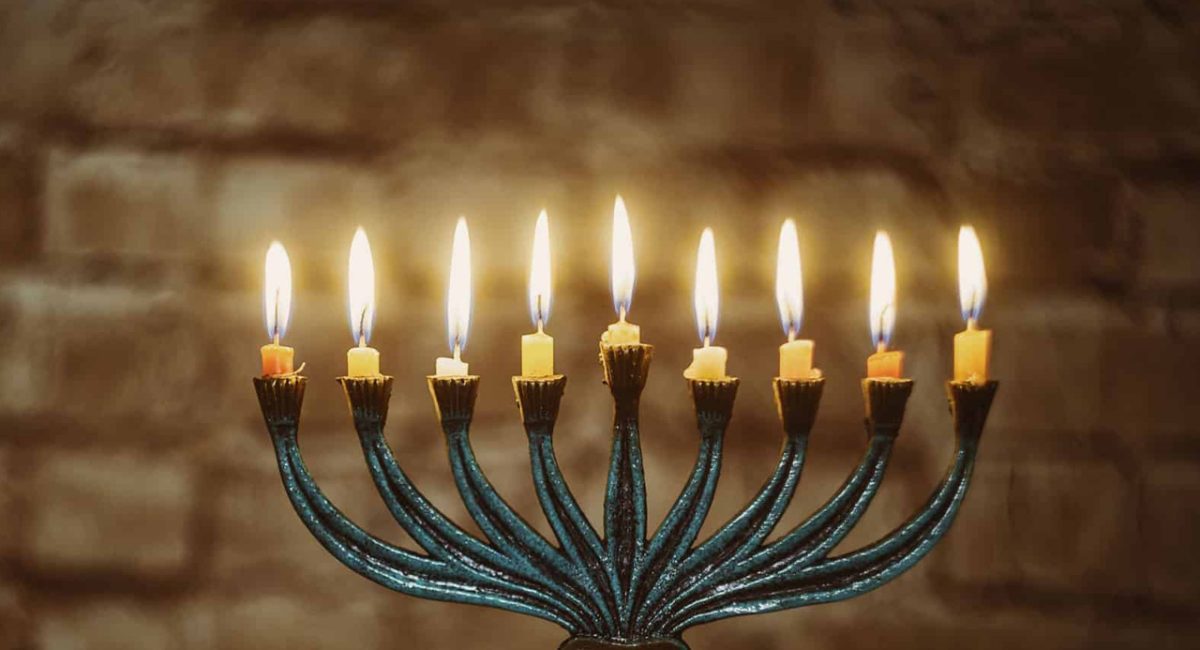
The symbolism of Hanukkah is rich. During the festival, a special nine-branched lampstand called the hanukkiah is used. The central candle—called the shamash or servant candle—lights all the others. What a powerful picture of Christ!
Jesus, the Servant King, lights us with His life so that we, too, may shine. Paul echoes this in Philippians 2:15, urging us to “shine like stars in the universe.” Our light is not our own; it flows directly from Him.
Our Call To Shine
This is where the story meets us today. Hanukkah reminds us of courage, dedication, and light. Jesus fulfills Hanukkah by being the true Light of the World.
He lights us so that we can illuminate the darkness around us—through deeds of love, words of truth, and lives that glorify the Father. Just as the shamash lights each candle, Christ lights each of us so the world can see His glory.
Conclusion
All glory be to Jesus—the Light who cannot be extinguished, the Light who shines through us so that we may shine into the world.
We hope you enjoyed this article. If there is something that stood out to you and is prompting you want to learn more as an individual or group please get in touch with us. If you have a story of impact that you want to share with us let us know. Contact us today.
Stay in touch with what we are doing around the country by subscribing and following us on our social media handles below.
Cynthia Mabaso Chimanikire
This article was written by Cynthia Mabaso Chimanikire. Cynthia is the co-founder of New Gates and heads the organisation’s operations and learning strategies. Prior to joining New Gates full-time, Cynthia worked at the Central Bank of Eswatini as the Skills Development Consultant for the Bank’s Academy. Cynthia is married to Berven and together raises three leaders in their home Ethan, Zamar and Joseph. Cynthia’s is passionate about discipleship in families and organisations. Her mantra is “Raising Leaders for tomorrow”.


